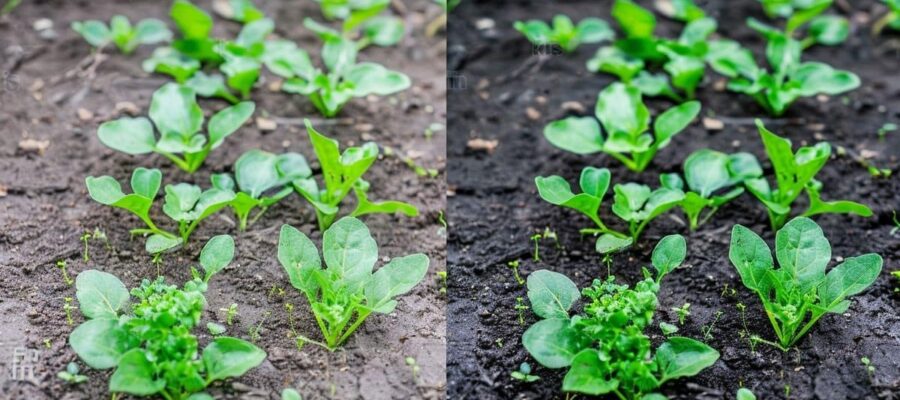
White vinegar is emerging as an environmentally friendly alternative to chemical herbicides to combat weeds. Its morning use, between 6:00 and 11:00, is often recommended to maximize its effectiveness. But does this method have limits? Decipher the advantages and disadvantages of a natural remedy appreciated by eco-responsible gardeners.
White vinegar, formidable natural herbicide
Contains white vinegaracetic acidan organic compound that works by burning the aerial parts of unwanted plants. Unlike chemical herbicides, it does not penetrate plant tissues, thus limiting its action to just one contact effect. Its effectiveness depends on the concentration and application time.
Homemade recipes to optimize its action
To enhance its weeding power, white vinegar is often mixed with other products:
- sel : dries out the roots and prevents their regrowth.
- Hot water : Facilitates the penetration of the mixture into the leaves.
- Dish detergent : Relaxes the protective wax of plants, allowing better absorption.
A common recipe combines 1 liter of white vinegar, 500 g of salt et 2.5 liters of water. Some add essential oils (lemongrass) to enhance the effect.
Best practices for optimal application
Early morning, the key to success
The application enters 6:00 and 11:00 it is crucial. At this time, the dew present on the leaves facilitates the absorption of the compound, while the humidity of the soil softens the roots, simplifying manual uprooting. The morning freshness also limits the rapid evaporation of the vinegar, ensuring a prolonged action.
Combine weed killer and manual weeding
White vinegar does not kill deep roots. To avoid regrowth it is essential combine spraying and eradication with a hoe or weeder. This method eliminates weeds at the root, reducing their ability to regenerate.
The limits and alternatives to this method

Risks for the soil and surrounding plants
White vinegar acidifies the soil in the long term, altering it fertility and microbial life. Its intensive use can also damage cultivated plants if the mixture is not targeted. It is therefore not recommended flowerbeds or the vegetable gardens.
Natural alternatives to complete the treatment
Faced with the limitations of vinegar, other methods are emerging:
- Nettle manure : Maceration of 1 kg of nettles in 10 liters of water for 10 days. Diluted it acts as a fertilizer and herbicide.
- Mulching : Lay out straw or wood chips to smother weeds by blocking light.
- Baking soda : Sprinkled on the affected areas, it dries the plants by absorbing the water.
Weeding in April: strategic timing
April, the ideal month to take action
Spring marks the rebirth of weeds, but also their vulnerability. In April the roots are still underdeveloped and therefore it is easier to remove them. Intervening early limits competition water, nutrients and lightpreserving the health of cultivated plants.
A natural weeding program
- Week 1 : Spray with white vinegar in the morning.
- Week 2 : Manual uprooting of withered plants.
- Week 3 : Application of nettle manure to strengthen the soil.
Precautions to be taken to avoid damage
Avoid excessive application
White vinegar should be used punctually. Its excessive acidity can:
- It alters the pH of the soilinfluencing plant growth.
- Unbalanced microorganisms beneficial for fertility.
Protection of useful plants
To avoid burning your desired plants, use a precise sprayer and test the mixture on a small area before applying it widely.
: a method to be adapted according to needs
White vinegar is one solution effective in the short term for paved or gravelled areas, but insufficient for complex gardens. Its effectiveness lies in its combination with other techniques : manual weeding, mulching or use of manure. For a sustainable garden, choose a global approachcombining prevention (cover planting) and targeted interventions.
Eco-responsible gardeners will appreciate this economical method, as long as they respect the application rules and do not abuse them. As experts point out, “white vinegar is a useful tool, but not a miracle solution.”
Conclusion
White vinegar has gained popularity as a natural and eco-friendly alternative to chemical herbicides, offering a simple and accessible way to control weeds. Its effectiveness lies in its acetic acid content, which dries out and damages plant tissues upon contact. When applied in the morning—between 6:00 and 11:00—it benefits from optimal conditions, as sunlight and heat enhance its action, allowing for faster and more visible results. This makes it an appealing option for gardeners seeking quick, non-toxic solutions.
One of the main advantages of white vinegar is its environmental profile. Unlike many synthetic herbicides, it does not introduce persistent chemicals into the soil and poses fewer risks to pets, wildlife, and groundwater. It is also inexpensive and easy to use, making it particularly attractive for small-scale gardening and maintenance of paths, driveways, or patios. For those adopting eco-responsible practices, it represents a practical step toward reducing chemical dependency.
However, this natural remedy also has clear limitations. White vinegar is a non-selective contact herbicide, meaning it affects any plant it touches, including desirable ones. It typically only destroys the visible parts of weeds, leaving the roots intact, which allows regrowth over time—especially for perennial species. Additionally, repeated use may alter soil balance and potentially impact beneficial microorganisms if applied excessively. Its effectiveness can also vary depending on weather conditions and the type of weeds being treated.
Ultimately, white vinegar is best viewed as a complementary solution rather than a complete replacement for traditional weed control methods. It works well for targeted, surface-level treatments and in areas where long-term soil impact must be minimized. By understanding both its strengths and its limitations, gardeners can use it wisely as part of a broader, sustainable approach to weed management, achieving a balance between efficiency and environmental responsibility.
latest posts published

Guide to choosing the right size
Ideal ratio for a high performance engine

Easy installation and practical advantages

How to use sodium bisulfate in a swimming pool: dosage and precautions

Use it correctly for optimal maintenance

The best ideas for an elegant look

Advantages and limitations of this natural coating

How to choose and install your curtains

Materials and advice for better insulation