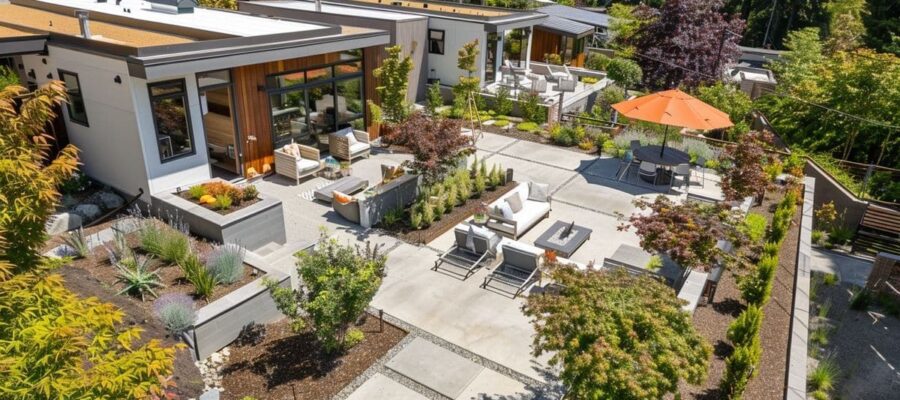
3D U-shaped house plan: inspirations and ideas for your future project
3D modeling is revolutionizing U-shaped home design, offering unprecedented precision and unprecedented customization possibilities. Thanks to tools such as 3D scanning or specialized software, architects and owners can view their projects from all angles, anticipate technical challenges and optimize space. In this article we explore best practices, recommended software, and emerging trends to turn your idea into reality.
Architectural precision and detail
3D modeling makes this possible faithfully represent complex structures U-shaped houses, including curves, corners and decorative elements. Unlike traditional 2D plans, this technology captures all the details : position of windows, ceiling height, opening of internal/external spaces. 3D scans, in particular, deliver millimeter precision generating models compatible with formats such as .DWG or BIM (Building Information Modeling) software.
Customization and flexibility
With tools like SketchUp or Revit, users can edit in real time the dimensions, materials or layout of the rooms. For example, a veranda built in the central courtyard of a U-shaped house can be tested virtually before any construction. This approach reduces errors and speeds up decisions, especially for renovation or expansion projects.
Inspiration for U-shaped house plans
Integration of outdoor spaces
U-shaped houses are particularly suitable fordevelopment of courtyards or central gardens. By modeling these spaces in 3D, architects can:
- Optimize natural light adjusting the orientation of the windows.
- Create relaxation areas (pool, terrace, barbecue) in harmony with the architecture.
- Integrate landscape elements (fountains, vegetation) to reinforce the aesthetic appearance.
Optimization of internal space
The U shape allows this dedicate the wings to specific functions :
- Left wing : Bedrooms and bathrooms.
- Right wing : Kitchen, dining room and living room.
- Central courtyard : Circulation space or patio.
3D modeling helps view flows (movement of people, access to rooms) and to avoid spatial overloads.
Recommended software for 3D design
SketchUp: simplicity and accessibility
SketchUp It is ideal for beginners and professionals. Its intuitive interface allows you to:
- Create quickly U-shaped house models.
- Personalize textures, colors and materials.
- Exporter plan in formats compatible with AutoCAD or Revit.
AutoCAD Architecture: Technical Precision
AutoCAD architecture excels at complex projects :
- Automatic generation 2D plans from 3D models.
- BIM data management coordinate interventions (plumbing, electrical).
- Dimensional accuracy essential for building permits.
ArchiCAD and Revit: advanced BIM modeling
Archicad et Revit are references for architects:
- Parametric modeling : Dynamic adjustment of elements (doors, windows).
- Real-time collaboration with engineers and entrepreneurs.
- Automated documentation (plans, specifications, material lists).
Key steps to create a 3D U-plane
Feasibility study
Before launching the project, a preliminary analysis is fundamental:
- Scan the existing (in case of renovation) to obtain as-built floor plans.
- Evaluate constraints (budget, local regulations, environment).
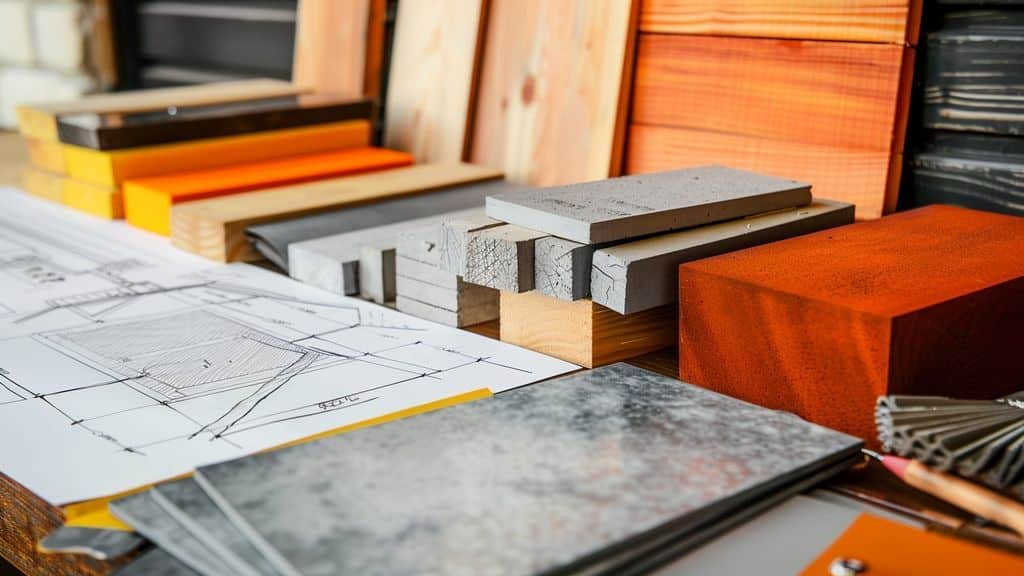
- Choose the materials (concrete, wood, metal) depending on durability and aesthetics.
Collaboration with professionals
Work with a architect or design studio guarantees:
- Compliance with standards (safety, isolation, accessibility).
- Cost optimization through precise resource management.
- Integration of innovative solutions (solar panels, home automation systems).
Emerging trends in 3D construction
3D printing and sustainable construction
THE’3D impression emerges as an ecological alternative:
- Waste reduction : Materials deposited layer by layer without waste.
- Local materials : Special concrete or recyclable composites.
- Reduced costs : Up to 30% savings with minimal labor.
Example: Fully stamped houses in Texas or France demonstrate the feasibility of this method.
Augmented reality integration
THE augmented reality (AR) allows you to:
- View plans in the real environment via mobile applications.
- Simulate changes (adding a porch, changing color).
- Communicate effectively with customers or partners.
3D modeling is now essential to design functional and aesthetic U-shaped homes. Whether you opt for software like SketchUp or cutting-edge technologies like 3D printing, these tools turn technical challenges into creative opportunities. Combining precision, customization and durability, they redefine the standards of modern construction. For your next project, explore these solutions to turn your vision into tangible reality.
Conclusion
3D modeling has transformed the way U-shaped house projects are imagined, designed, and executed, offering a level of precision and visualization that was previously difficult to achieve. By allowing architects and homeowners to explore layouts from every angle, anticipate structural challenges, and refine details before construction begins, these tools significantly reduce uncertainty and improve decision-making throughout the process.
The U-shaped design itself benefits greatly from this technology. Known for its ability to create a central courtyard, enhance natural light, and provide a sense of privacy, this layout requires careful planning to balance openness with functionality. With 3D tools, it becomes easier to optimize room distribution, circulation, and outdoor integration, ensuring that every space is both practical and harmonious. Adjustments can be made in real time, helping to align the project with both aesthetic preferences and technical constraints.
In addition, the wide range of available software—from beginner-friendly platforms to advanced architectural programs—makes 3D modeling accessible to a broader audience. Whether you are a professional or a homeowner involved in the design process, these tools encourage collaboration and creativity, allowing ideas to evolve more efficiently. Emerging trends, such as virtual reality integration and realistic rendering, further enhance the experience by offering immersive previews of future living spaces.
Ultimately, using 3D modeling for a U-shaped house project is not just about visualization—it is about control, optimization, and confidence. By leveraging these technologies and following best practices, it is possible to transform an initial concept into a well-structured, functional, and visually appealing home. This approach ensures that the final result meets both practical needs and design aspirations, turning your vision into a tangible and successful reality.
latest posts published

Guide to choosing the right size

Ideal ratio for a high performance engine

Easy installation and practical advantages

How to use sodium bisulfate in a swimming pool: dosage and precautions

Use it correctly for optimal maintenance

The best ideas for an elegant look
Advantages and limitations of this natural coating

How to choose and install your curtains
Materials and advice for better insulation