Springtails, small jumping insects often confused with fleas, can become a nuisance in homes. Although they are not dangerous to humans, their proliferation generally indicates problems with humidity or organic waste management. This guide offers effective methods to identify, eliminate and prevent their presence, relying on natural solutions and sustainable practices.
Biology and behavior
Springtails (or springtails) belong to the Collembola order. These microinsects measure from 1 to 10 mm, have a soft cuticle and a jumping organ (furca) that allows them to push themselves. They feed on decaying organic matter, fungi or algae and prefer moist, dark environments.
Their presence in large numbers often reveals:
- Excessive humidity in walls, cellars or gardens.
- An accumulation of organic waste (compost, decaying plants).
- Poorly ventilated areas promoting the growth of microorganisms.
Identification methods
Signs of infestation
Recognizing springtails requires careful observation:
- Presence of small black or greyish dots on damp walls, plants or floors.
- Characteristic jumps when they are disturbed.
- Visible colonies near sources of stagnant water (gutters, flower pots).
Differentiate springtails from other insects
| Characteristic | Springtails | Fleas or other insects |
||-|–|
| Size | 1-10mm | Bigger |
| Color | Grey, black, brown | Varies |
| Jumping Organ | Furca visible | Absent |
| Behavior | Quick jumps | Slow movements |
Causes of infestations
Key proliferation factors
- High humidity : Springtails adapt to humidity levels above 60%.
- Organic waste : Compost, dead leaves or decaying plants attract these insects.
- Lack of ventilation : Cellars, garages or poorly ventilated basements favor its development.
Special cases: Gardens and green spaces
In outdoor environments, springtails can proliferate in:
- Poorly managed compost bins (accumulation of organic waste).
- Compact Sols limiting air penetration.
- Overgrowing plants creating humid microclimates.
Natural solutions

Reduce humidity and improve ventilation
- Dry wet areas : Use dehumidifiers or fans in poorly ventilated rooms.
- Clean up organic waste : Remove dead leaves, plant remains and excess compost.
- Ventilate the spaces : Open windows, install ventilation grills in cellars.
Use natural amendments
THE biochar (charcoal) showed effects on springtail survival at high doses (above 10% m/m). Although its effectiveness varies depending on the type of biochar, it can:
- Change the texture of the terrain to reduce humidity.
- Promote beneficial microorganisms competitive with springtails.
Other ecological methods
- Diatomaceous earth : Abrasive powder that dehydrates insects.
- Essential oils (eucalyptus, lavender): repellent, but use in moderation.
Chemical treatments
Targeted insecticides
In case of massive infestation, specific insecticides can be used:
- Pyrethrinoids : Act by contact, but requires repeated applications.
- Systemic insecticides : Absorbed by plants, but risky for pollinators.
Precautions :
- Avoid broad-spectrum products to avoid disturbing ecosystems.
- Prefer targeted treatments on the affected areas.
Long-term prevention
Organic waste management
- Controlled composting :
- Separate organic waste from risk areas.
- Use aerated composters to limit humidity.
- Regular cleaning :
- Remove dead leaves and plant debris.
- Disinfect surfaces with a diluted bleach solution.
Soil improvement
- Air the floors : Incorporate sand or gravel to improve drainage.
- Avoid excess fertilizer : Soils that are too rich in organic matter attract springtails.
Practical cases and case studies
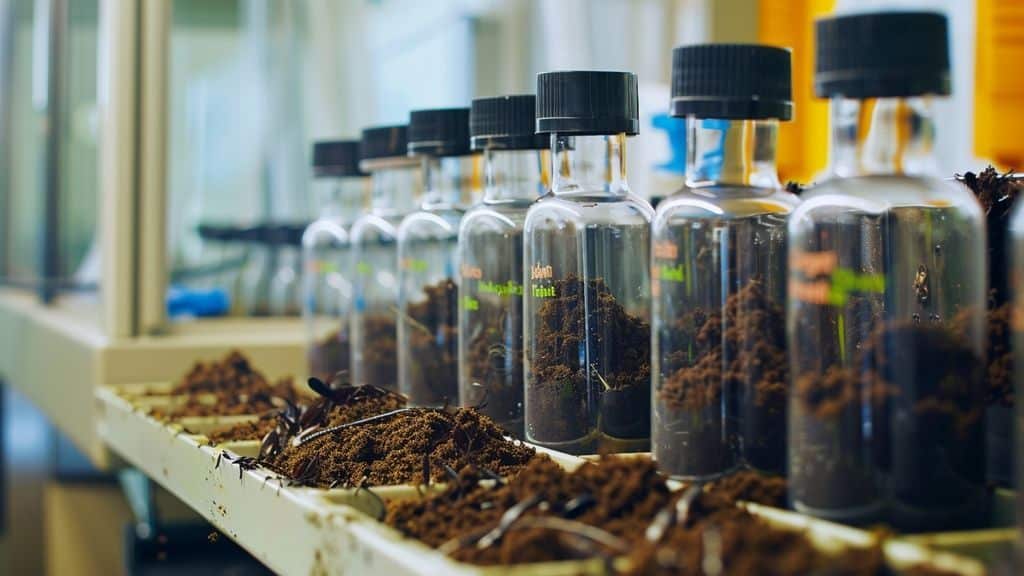
Experience with biochar
A recent study tested the effectiveness of biochar on springtail survival. At doses above 10% w/w, one type of biochar reduced its population, likely changing soil structure and limiting access to moisture. However, results vary depending on the composition of the biochar and environmental conditions.
Community organic waste management
In some municipalities, initiatives such as the distribution of bioseaux and composting training has helped reduce organic waste at the source. These actions indirectly limit springtail habitats by controlling the accumulation of decaying matter.
Eliminating springtails requires a global approach: identifying the causes (humidity, waste), acting on environmental factors and preventing recurrences. Natural solutions, such as biochar or rigorous waste management, offer sustainable alternatives to chemical treatments. By combining these methods with regular monitoring, it is possible to effectively control these microinsects without harming the ecosystem.
onclusion
Springtails, though small and often mistaken for fleas, are generally harmless insects that play a natural role in breaking down organic matter. However, their presence inside the home can quickly become bothersome, especially when they appear in large numbers. Rather than being a direct threat, they are usually a clear indicator of underlying issues such as excess moisture, poor ventilation, or the accumulation of organic debris. Understanding this connection is essential for addressing the problem effectively.
The key to managing springtails lies not only in eliminating the visible insects but also in tackling the root causes that allow them to thrive. High humidity levels, damp surfaces, and neglected areas—such as plant soil, bathrooms, or basements—create ideal conditions for their proliferation. By reducing moisture through proper ventilation, fixing leaks, and maintaining dry environments, homeowners can significantly limit their presence. Simple habits like regular cleaning and proper waste management also play a crucial role in preventing infestations.
Natural and sustainable solutions offer an effective way to control springtails without relying on harsh chemicals. Techniques such as improving air circulation, using dehumidifiers, and applying gentle treatments like diatomaceous earth can help reduce their numbers while maintaining a healthy indoor environment. These methods are not only safer for occupants but also align with long-term prevention strategies.
Ultimately, dealing with springtails is less about eradication and more about restoring balance within the home. By identifying the environmental conditions that attract them and implementing consistent maintenance practices, it is possible to keep their population under control. With the right approach, homeowners can maintain a clean, dry, and comfortable living space, free from unnecessary nuisances while promoting a healthier indoor ecosystem.
latest posts published

Guide to choosing the right size
Ideal ratio for a high performance engine

Easy installation and practical advantages

How to use sodium bisulfate in a swimming pool: dosage and precautions

Use it correctly for optimal maintenance
The best ideas for an elegant look

Advantages and limitations of this natural coating

How to choose and install your curtains

Materials and advice for better insulation